
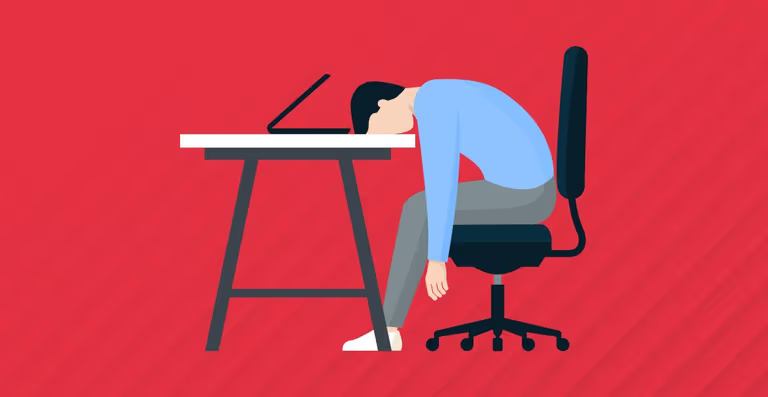
Introduction: Burnout Isn’t the Price of Success—It’s the Roadblock to It
Entrepreneurship is exhilarating—but it can also be exhausting. While building a business often requires sacrifice, too many entrepreneurs confuse relentless hustle with progress. Eventually, the constant pressure to perform, manage, innovate, and scale leads to entrepreneur burnout—a mental, emotional, and physical crash that’s all too common and dangerously underestimated.
If you’re feeling perpetually exhausted, easily frustrated, mentally foggy, or emotionally numb, you’re not alone—and you’re not broken. You’re likely experiencing the warning signs of burnout. Left untreated, it doesn’t just slow you down—it can stop you in your tracks.
In this comprehensive guide, you’ll discover exactly how to:
-
Recognize the stages and symptoms of burnout in entrepreneurs
-
Recover your energy, motivation, and focus without stepping away from your business
-
Build a sustainable system for long-term growth without sacrificing well-being
Let’s break the myth that burnout is the badge of high achievers. You didn’t build your business to lose yourself in the process.
What is Entrepreneur Burnout, Really?
Burnout isn’t just about being tired. It’s a clinical condition recognized by the World Health Organization as a result of chronic workplace stress that has not been successfully managed. For entrepreneurs, the stakes are even higher. You’re not just clocking into a job—you’re living and breathing your business every day.
The 3 Core Dimensions of Burnout:
-
Emotional Exhaustion – Feeling drained, depleted, or emotionally overwhelmed.
-
Depersonalization – Becoming detached or cynical about your business, clients, or goals.
-
Reduced Personal Accomplishment – Feeling ineffective, unproductive, or like your efforts don’t matter.
Unlike employees, entrepreneurs often lack external structures—like managers, HR departments, or wellness programs—to spot these signs early. That means you have to learn how to self-monitor and self-regulate.
Common Causes of Burnout in Entrepreneurs:
-
Long hours and no real days off
-
Wearing too many hats (CEO, marketer, customer service rep, etc.)
-
Chronic uncertainty and financial pressure
-
Isolation from peers or support systems
-
Perfectionism and over-identification with the business
Recognizing these patterns is the first step toward reversing them.
Why Managing Burnout is a Business Strategy, Not a Luxury
You may think, “I don’t have time to rest.” But burnout costs more than time—it costs revenue, clarity, leadership capacity, and innovation.
Consider this:
-
According to a study by Deloitte, 77% of professionals have experienced burnout at their current job.
-
Burnout reduces productivity by up to 50%, even if you’re still “showing up.”
-
Chronic stress lowers immunity, increases decision fatigue, and negatively affects your ability to lead and adapt.
You’re the most valuable asset in your business. If you go down, everything else slows or collapses. That’s why managing burnout is not self-indulgent—it’s strategic.
When you protect your energy:
-
You make better decisions.
-
You operate in your zone of genius.
-
You create more space for vision, creativity, and innovation.
It’s not about working less—it’s about working smarter, recovering often, and creating sustainable momentum.



wujlojhidgoivgrwotunnwpntvqlqt